The source refused this stream. Nothing else on the page is affected — the cast, ratings and details below are all live.
Trailer finished
0:00 / 0:00
Film
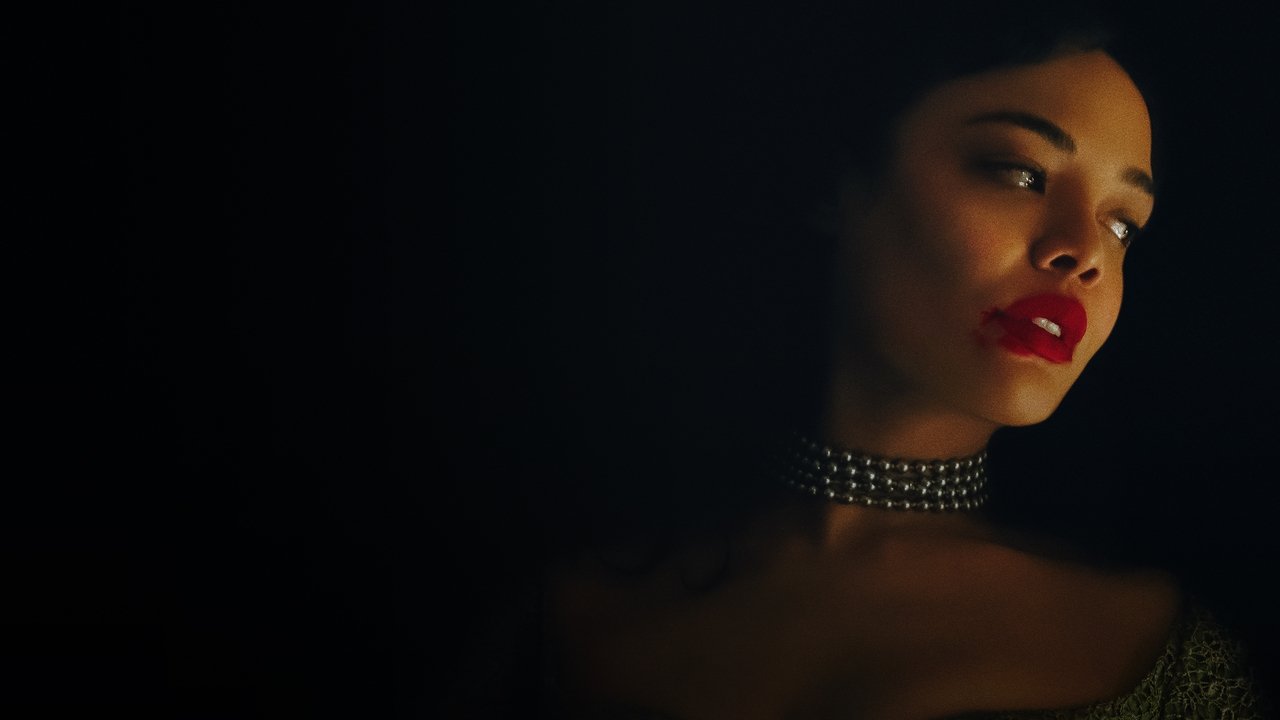
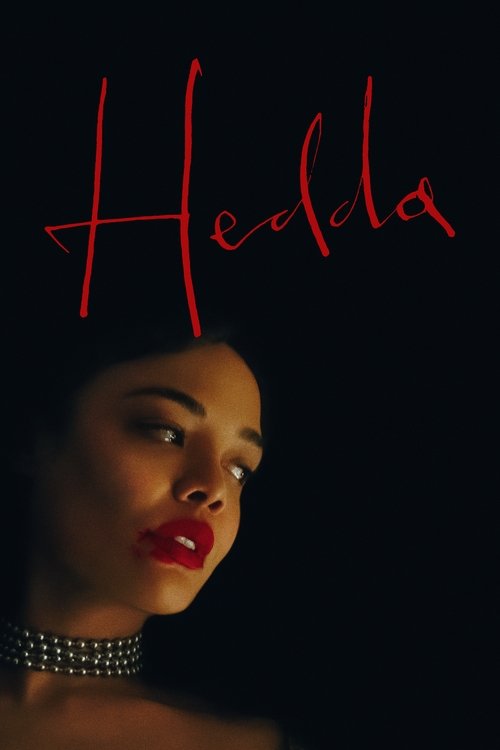
Hedda
2025·R·107 min·★5.4135 votes
Hedda (2025) is a drama, thriller and romance film. It runs 107 minutes. It was directed by Nia DaCosta. TMDB viewers rate it 5.4 out of 10 from 135 votes. It carries an R age rating. In the United States it streams on Amazon Prime Video and Amazon Prime Video with Ads.
Hedda (2025) is a drama, thriller and romance film directed by Nia DaCosta from United States. It runs 107 minutes and is listed as released. Tessa Thompson and Nina Hoss lead the cast. It took $8,393 at the box office. Viewers rate it 5.4 out of 10 from 135 votes. In the United States it streams on Amazon Prime Video, Amazon Prime Video with Ads.
Synopsis
Hedda Gabler finds herself torn between the lingering ache of a past love and the quiet suffocation of her present life. Over the course of one charged night, long-repressed desires and hidden tensions erupt—pulling her and everyone around her into a spiral of manipulation, passion, and betrayal.
How to watch
BestRecommended
Stream on MovieState
Availability differs by country and server. Check the options on this page first, then open the player.
**Awful acting** I am sorry but tessa thompson is a terrible lead actress. I saw her try to act in this movie as well as West World and she needs to find a new day job. My husband actually started laughing out loud at one of her "serious" scenes. Movie was pretty crummy anyway, I don't think a different lead actress…
**Awful acting** I am sorry but tessa thompson is a terrible lead actress. I saw her try to act in this movie as well as West World and she needs to find a new day job. My husband actually started laughing out loud at one of her "serious" scenes. Movie was pretty crummy anyway, I don't think a different lead actress would have saved it.
TriceratopsAU1/10
I don't understand how the lead actress in this keeps getting parts? She's a terrible actress, it's like she is sitting at a table read and just reading her lines aloud. She has absolutely zero charisma and is is definitely not attractive, nor even cute. I guess Hollywood continues to cast people like her for **some…
I don't understand how the lead actress in this keeps getting parts? She's a terrible actress, it's like she is sitting at a table read and just reading her lines aloud. She has absolutely zero charisma and is is definitely not attractive, nor even cute. I guess Hollywood continues to cast people like her for **some reason**.
Brent Marchant6/10
Reinterpreting a classic work of art – no matter what medium it might initially be grounded in – can be a tricky task. This is true when jumping from one milieu to another, such as stage to screen, as well when altering the nature or elements of the work, such as its setting, time frame and characters. And, if more…
Reinterpreting a classic work of art – no matter what medium it might initially be grounded in – can be a tricky task. This is true when jumping from one milieu to another, such as stage to screen, as well when altering the nature or elements of the work, such as its setting, time frame and characters. And, if more than one of these qualities undergoes transformation simultaneously, the metamorphosis can become considerably challenging, if not problematic. Such is the task undertaken by writer-director Nia DaCosta in this reimagining of the time-honored stage play Hedda Gabler by Norwegian playwright Henrik Ibsen. When Ibsen penned this work in 1890, it represented a continuation of his examination of strong-willed women, an undertaking that some contend ironically made him a pioneer of feminist thinking. That initiative began with A Doll’s House in 1879, a play in which he chronicled the life of a subservient wife and mother who courageously rose up to challenge her controlling husband. In Gabler, however, Ibsen wrote about a darker figure, an ambitious, manipulative trophy wife who sought a life of wealth and comfort and willfully did whatever it took to achieve it, no matter how questionable or menacing. In this current adaptation, the filmmaker advances themes launched in Ibsen’s original production but with some adjustments to make it more contemporary – and more sinister. For starters, this version is set in the 1950s rather than the late 19th Century, complete with technology, musical styles and other aspects of everyday life that weren’t in existence in Ibsen’s time. Hedda (Tessa Thompson) has changed somewhat, too; she’s still the insincere, conniving schemer she was in the original, though she’s now Black, bisexual and more compellingly driven than ever. As before, she’s married to an adoring but somewhat dull, overly cerebral university academic, George (Tom Bateman), who’s bucking for a professorship that will compensate him handsomely, enabling him to dotingly support his beloved in the lap of luxury she craves, an effort she doesn’t always appreciate. However, George’s hopes for being promoted aren’t guaranteed given the challenge posed by a rival…
CinemaSerf
Right from the start, when we hear “Hedda” (Tessa Thompson) called to the phone, we can discern that Nia DaCosta has shifted the timeline from the late 1800s. Indeed, we now find ourselves in the middle of the 20th century in a grand stately home where her academic husband “George” (Tom Bateman) is imploring her to…
Right from the start, when we hear “Hedda” (Tessa Thompson) called to the phone, we can discern that Nia DaCosta has shifted the timeline from the late 1800s. Indeed, we now find ourselves in the middle of the 20th century in a grand stately home where her academic husband “George” (Tom Bateman) is imploring her to pull out all of the stops at a lavish party they are to host to impress “Prof. Greenwood” (Finbar Lynch) who is looking for someone to take a lucrative tenure at his university. “Hedda” has other plans for the evening, though, especially when his rival “Eileen” (Nina Hoss) shows up - a woman with whom she has had a past, and then swiftly afterwards by her rather insipid lover “Thea” (Imogen Poots) whom “Hedda” also knew, though from childhood this time. With the champagne flowing, the scene is now set for the hostess to have some fun. Nobody, including her completely out of his depth husband, is safe but it’s the unexpected nature of the wheels coming off that leads to a toxicity and then to a tragedy that wasn’t on anyone’s horizon at the start of the evening. Now candidly, this just didn’t really work for me. The whole production looked like it was spawned by one of Sir Kenneth Branagh’s “Poirot” remakes with lots of hedonism (well dirty talk, anyway) and over-indulgence thrown in to create a melodrama of remarkably dull proportions. Perhaps I’m just too sanitised to stories of excess, or to the increasingly ubiquitous lesbian sub-plots that we can’t seem to do without nowadays, but Thompson just didn’t exude anything like enough of the manipulative and scheming “Hedda” to convince. Moreover, as the film develops it’s really quite unclear why she and her husband might ever have married on the first place. Ibsen’s play makes it clear she is an ambitious and venal woman, but here that character is effortlessly outperformed by an Hoss who brings a voluptuous and calculating feistiness to her role, and who certainly steals most the latter part of the film. Sure, effort has gone into the look of the film and at times it can resonate, but with lacklustre efforts from Nicholas Pinnock and Poots offering little to support the complexities of the original…