Synopsis
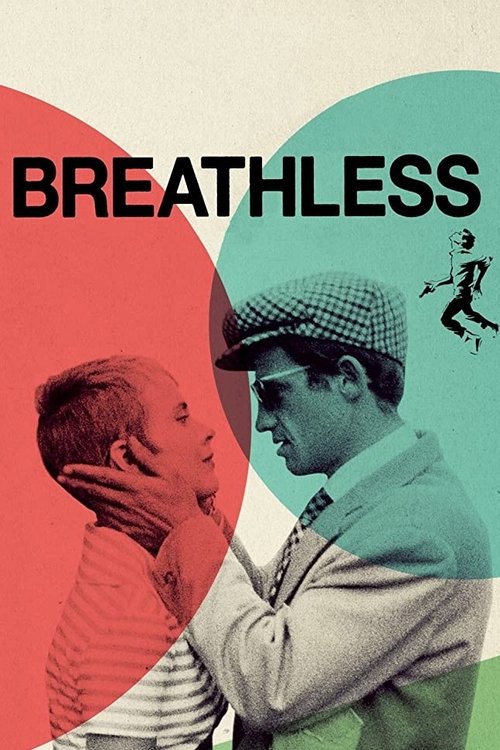
A small-time thief steals a car and impulsively murders a motorcycle policeman. Wanted by the authorities, he attempts to persuade a girl to run away to Italy with him.

The trailer isn't playing right now
The source refused this stream. Nothing else on the page is affected — the cast, ratings and details below are all live.
Trailer finished
Film
À bout de souffle
Breathless (1960) is a drama, crime and romance film. It runs 90 minutes. It was directed by Jean-Luc Godard. TMDB viewers rate it 7.5 out of 10 from 2,000+ votes. It carries a NR age rating. In the United States it streams on HBO Max Amazon Channel, Criterion Channel and Darkroom.
“Wild! Violent! Outspoken and Honest!”
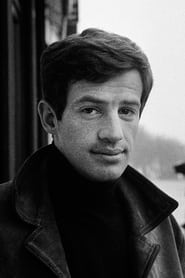 Jean-Paul Belmondo
Michel Poiccard / László Kovács
 Jean Seberg
Patricia Franchini
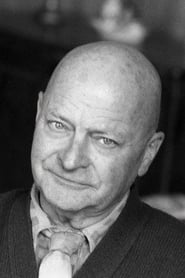 Daniel Boulanger
Police Inspector Vital
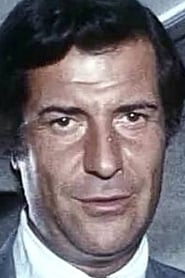 Henri-Jacques Huet
Antonio Berrutti
 Roger Hanin
Carl Zubart
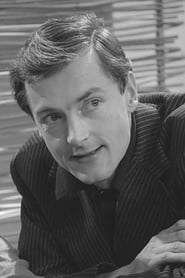 Van Doude
American Journalist, Patricia's Friend
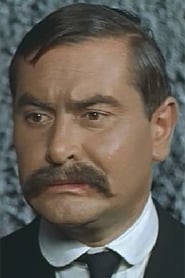 Claude Mansard
Claudius Mansard
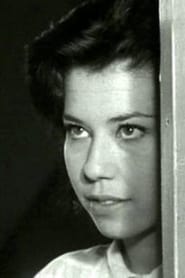 Liliane Dreyfus
Liliane / Minouche
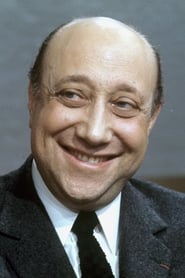 Jean-Pierre Melville
Parvulesco the Writer
 Jean-Luc Godard
The Snitch
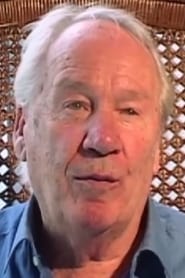 Richard Balducci
Tolmatchoff
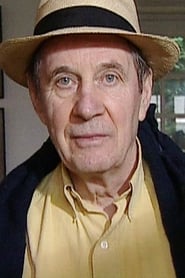 André S. Labarthe
Journalist at Orly
 François Moreuil
Journalist at Orly
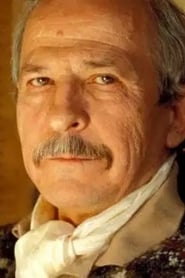 Gérard Brach
Photographer (uncredited)
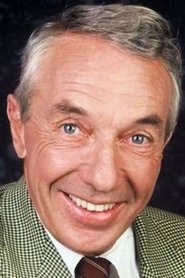 Philippe de Broca
A Journalist (uncredited)
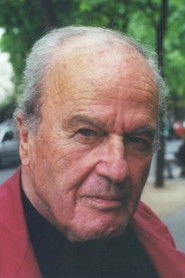 José Bénazéraf
Man in a White Car (uncredited)
 Jean Douchet
A Journalist (uncredited)
 Raymond Huntley
A Journalist (uncredited)
 Michel Mourlet
Audience in the Movie Theater (uncredited)
Breathless (1960) is a drama, crime and romance film directed by Jean-Luc Godard from France. It runs 90 minutes and is listed as released. Jean-Paul Belmondo and Jean Seberg lead the cast. Viewers rate it 7.5 out of 10 from 2,130 votes. In the United States it streams on HBO Max Amazon Channel, Criterion Channel, Darkroom.
A small-time thief steals a car and impulsively murders a motorcycle policeman. Wanted by the authorities, he attempts to persuade a girl to run away to Italy with him.
Best Recommended
Stream on MovieState
Availability differs by country and server. Check the options on this page first, then open the player.
 HBO Max Amazon Channel
 Criterion Channel
 Darkroom
 HBO Max
 Kanopy
 Amazon Video
 Apple TV Store
 Google Play Movies
 YouTube
 Fandango At Home
Amazon Video
Apple TV Store
Google Play Movies
YouTube
Fandango At Home
Official streaming partners in the United States. Availability varies by country and provider, and these are listings rather than our own servers.
A key film of the late Fifties/early Sixties French New Wave, <i>À bout de souffle</i> (Breathless) opens with suave lowlife Michel Poiccard (Jean-Paul Belmondo) stealing a car. When he's caught speeding on the way to Paris and pursued by the police, Michel kills the officer. Desperate to collect some money owed and…
A key film of the late Fifties/early Sixties French New Wave, <i>À bout de souffle</i> (Breathless) opens with suave lowlife Michel Poiccard (Jean-Paul Belmondo) stealing a car. When he's caught speeding on the way to Paris and pursued by the police, Michel kills the officer. Desperate to collect some money owed and make his escape to Italy, he hides out with Patricia (Jean Seberg), an American girl he had slept with once and who is oblivious to the danger he's in. This is one of the most influential films of all time in its liberal use of jump cuts, in idolizing American noir films and transferring that aesthetic to a foreign country, and its allusions to other films and even self-referentially to itself. Goddard left plenty of signs that he was seeking to overturn the staid French mainstream tradition, such as when Michel rebuffs a hawker selling <i>Cahiers du cinema</i> (the French film magazine), or when Patricia interviews a film director named Parvulesco, who is none other than Godard's New Wave comrade-in-arms Jean-Pierre Melville. <i>À bout de souffle</i> is undeniably dated. Even knowing all that context around its creation and reception, I found it hard to be really bowled over and cannot award the film a full five stars – and I am a great fan of Godard’s subsequent work. Still, there's a lot to like. I'm particularly fond of the film's dialogue, which revels in French slang that hitherto had not been consider "proper" for art, most of which goes over Patricia's head and some of which Michel explains. In that sense one might compare the film to Raymond Queneau's novel <i>Zazie dans le métro</i> from the same time. The sexual frankness of its young characters might surprise younger viewers who would place this social upheaval to later in the 1960s.
Jean-Paul Belmondo spends much of this film in just his boxers after his "Poiccard/Kovacs" character pinches a car, kills the pursuing police officer and the ends up taking refuge with his new journalism student friend "Patricia" (Jean Seberg). She's not quite aware of the extent of the trouble her new beau is in when…
Jean-Paul Belmondo spends much of this film in just his boxers after his "Poiccard/Kovacs" character pinches a car, kills the pursuing police officer and the ends up taking refuge with his new journalism student friend "Patricia" (Jean Seberg). She's not quite aware of the extent of the trouble her new beau is in when he sets about trying to convince her that he has some cash coming and that they should go and live in Italy. His identity isn't exactly unknown to the cops either, and with his face plastered over the front page of every newspaper in Paris, his chances of attaining his idyll are beginning to look remote - especially as he has precisely no self-awareness as he travels the city for all to see. Of course, it has to be only a matter of time before "Patricia" finds out the truth about him - but what will she decide to do? It's essentially a two-hander between the pair and they gel well as the story gathers pace. Seberg's character is engaging and it's easy to see why she falls for the enigmatic and charming criminal who exudes about as much menace as a wet cabbage. There's a fun interview scene when she is charged with quizzing the writer "Parvulesco" (Jean-Pierre mMlville) - a rather pompous individual who announces his life's ambition is to become immortal and die. I guess that might have been how "Poiccard" might have looked at things too - though maybe not the second element too soon. Now the editing. Hmmm. It's messy. Might that be deliberate or just an intern with some sellotape and a blunt razor blade? It's another talking point for this quirky and entertaining crime drama - with a difference.
Summary: 10/10: a landmark film that invented the grammar contemporary cinema still speaks, and a sharper cultural critique than it's often given credit for. Taken out of its historical moment, Jean-Luc Godard's first feature isn't necessarily thrilling. But for 1960, it was groundbreaking, a film that shattered…
Summary: 10/10: a landmark film that invented the grammar contemporary cinema still speaks, and a sharper cultural critique than it's often given credit for. Taken out of its historical moment, Jean-Luc Godard's first feature isn't necessarily thrilling. But for 1960, it was groundbreaking, a film that shattered conventions so thoroughly that its innovations are now invisible, absorbed completely into the language of contemporary cinema. The technical aspects of Breathless remain totally relevant today: the revolutionary jump cuts, the handheld camera, the natural lighting, the guerrilla-style shooting without permits on Paris streets. Godard, working with cinematographer Raoul Coutard on a budget under $50,000 and a crew of just two people, invented techniques that would define independent filmmaking for generations. The docudrama aesthetic, the deliberately jagged rhythm, the refusal to respect continuity editing rules - all of this feels commonplace now precisely because Breathless made it possible. The narrative itself is decent, based on a story treatment by François Truffaut and Claude Chabrol that they handed to Godard when they decided not to make it themselves. Some read it as a love letter to Hollywood, an homage to American gangster films. But in the context of today, I interpret this film as a sarcastic comment on the bad boy films of the 1950s. Jean-Paul Belmondo really nailed the Bogart style, but crucially, without the underlying sensitivity of Bogart. Michel Poiccard performs masculinity, models himself consciously after movie stars, but there's nothing beneath the performance except emptiness and casual cruelty. And I have a different interpretation of the apparent misogyny that most reviewers misread. Given the stereotypical male and female performances, Michel's narcissistic posturing, Patricia's inscrutability, it seems like Godard is holding up a mirror to that culture, exposing rather than celebrating it. Roland Barthes would write that "the birth of the reader must be ransomed by the death of the Author," and perhaps this film proves his point; whether or not Godard consciously intended feminist critique, the narrative itself reveals the…
Tell us what is wrong with Breathless. Reports are reviewed by a person, not a bot.