






Synopsis
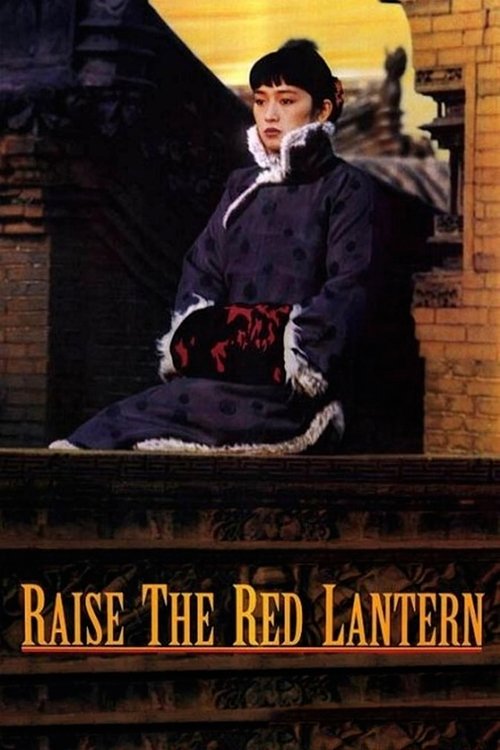
In 1920s China, 19-year-old Songlian becomes a concubine of a powerful lord and is forced to compete with his three wives for the privileges gained.
The trailer isn't playing right now
The source refused this stream. Nothing else on the page is affected — the cast, ratings and details below are all live.
Trailer finished
Film
大红灯笼高高挂
Raise the Red Lantern (1991) is a drama film. It runs 125 minutes. It was directed by Zhang Yimou. TMDB viewers rate it 8.1 out of 10 from 895 votes. It carries a PG age rating. In Germany it streams on Love and Passion Amazon Channel.
“China, 1920. One master, four wives.”
Raise the Red Lantern (1991) is a drama film directed by Zhang Yimou from China and Hong Kong SAR China. It runs 125 minutes and is listed as released. Gong Li and He Saifei lead the cast. Made for $1 million, it took $17 million at the box office. Viewers rate it 8.1 out of 10 from 895 votes. In Germany it streams on Love and Passion Amazon Channel.
In 1920s China, 19-year-old Songlian becomes a concubine of a powerful lord and is forced to compete with his three wives for the privileges gained.
Best Recommended
Stream on MovieState
Availability differs by country and server. Check the options on this page first, then open the player.
 Love and Passion Amazon Channel
 Amazon Video
Official streaming partners in Germany. Availability varies by country and provider, and these are listings rather than our own servers.
 Salon Films
**In the context of oriental cinema, it's a good film... but it's very different from the cinema that we, in the West, are used to, and this difference ends up killing our interest in this work.** I think this movie was the first Chinese movie I saw, I'm not really sure. I am not an expert on the cinema of this…
**In the context of oriental cinema, it's a good film... but it's very different from the cinema that we, in the West, are used to, and this difference ends up killing our interest in this work.** I think this movie was the first Chinese movie I saw, I'm not really sure. I am not an expert on the cinema of this country, but I can say that it is one of those films that you see without much special interest. Of course, I'm talking about the standard audience, because there are really oriental film lovers who will be more interested in this material. The script is based on the story of Song Lian, a very young and well-formed girl who, after her father's death, is coerced into finding a rich man to marry. She ends up being the fourth wife of a man, having to live with the other wives and learn how to behave in a complex family system, where rivalries and envy are part of everyday life. The film shows us a type of family life that, for us in the West, is far from being understandable. It could only take place in strongly patriarchal societies, where the role of women is more than subordinate. It's not a great film, but it's frankly decent, and I don't rule out the likelihood that it's a classic of Chinese cinema (experts will opine better). Gong Li does a very good job in the role of the young Song Lian, and is very well supported by Saifei He, Cuifen Cao, Lin Kong and Qi Zhao. Jingwu Ma doesn't do an inferior job either, in the role of the patriarch and husband of all those wives. The cinematography is very good, as are the costumes and sets, which take us back in time and geography. What prevented the film, perhaps, from being a greater success in the West was the lack of publicity and the difficulty in adapting to the environment of the film, which is very different from the cinema that Hollywood usually exports: it is much more meditative, passive and depressive than most of the cinema we used to see.
**Raise the Red Lantern:** Directed by Zhang Yimou, Raise the Red Lantern (大红灯笼高高挂) stands as a seminal work in Chinese cinema, premiering in 1991 and adapted from Su Tong's novel Wives and Concubines. The film achieved international acclaim, winning the Golden Lion at the Venice Film Festival and earning nominations…
**Raise the Red Lantern:** Directed by Zhang Yimou, Raise the Red Lantern (大红灯笼高高挂) stands as a seminal work in Chinese cinema, premiering in 1991 and adapted from Su Tong's novel Wives and Concubines. The film achieved international acclaim, winning the Golden Lion at the Venice Film Festival and earning nominations for the BAFTA Award for Best Foreign Language Film, solidifying its status as a landmark critique of feudal patriarchy. **Theme: Critique and Reflection on Feudal Ethics** The theme of Raise the Red Lantern is profound and weighty, offering a comprehensive critique and reflection on feudal ethics through its portrayal of women's fates in the Chen family compound. While feudal ethics once played a role in social stability and development in Chinese history, by modern times, they had gradually become shackles restricting people's thoughts and actions. In the film, the drawbacks of feudal ethics are vividly displayed. First, feudal ethics suppress and distort human nature. In the Chen family compound, women's personalities and desires are completely repressed, and they lose their basic rights and dignity as human beings. Songlian, originally a woman with independent thoughts and pursuits, is forced to abandon her ideals and become a vassal of men under the oppression of feudal ethics. The other concubines are no different—they resort to any means to gain favor, gradually losing themselves in intrigue and mutual harm. This distortion of human nature is a severe damage to the spiritual world by feudal ethics. Second, feudal ethics oppress and exploit women. In a patriarchal society, women are in an absolutely vulnerable position, with their fates entirely in the hands of men. Master Chen, as the head of the Chen family, holds supreme power, deciding the life, death, honor, and disgrace of his concubines at will. To gain his favor, the concubines have to do everything they can, even sacrificing their dignity and personality. Once fallen out of favor, they are mercilessly ignored and abandoned, sinking into endless pain. This oppression and exploitation of women are one of the essential features of feudal ethics. Third, feudal ethics are hypocritical and…
Despite some fairly significant changes to Chinese society by the 1920s, the role of the concubine was still pretty much as it had been for generations for the nineteen year old "Songlian" (Gong Li) who is essentially sold by her well-meaning mother into the home of a wealthy gent (Jingwu Ma). She is to be his fourth…
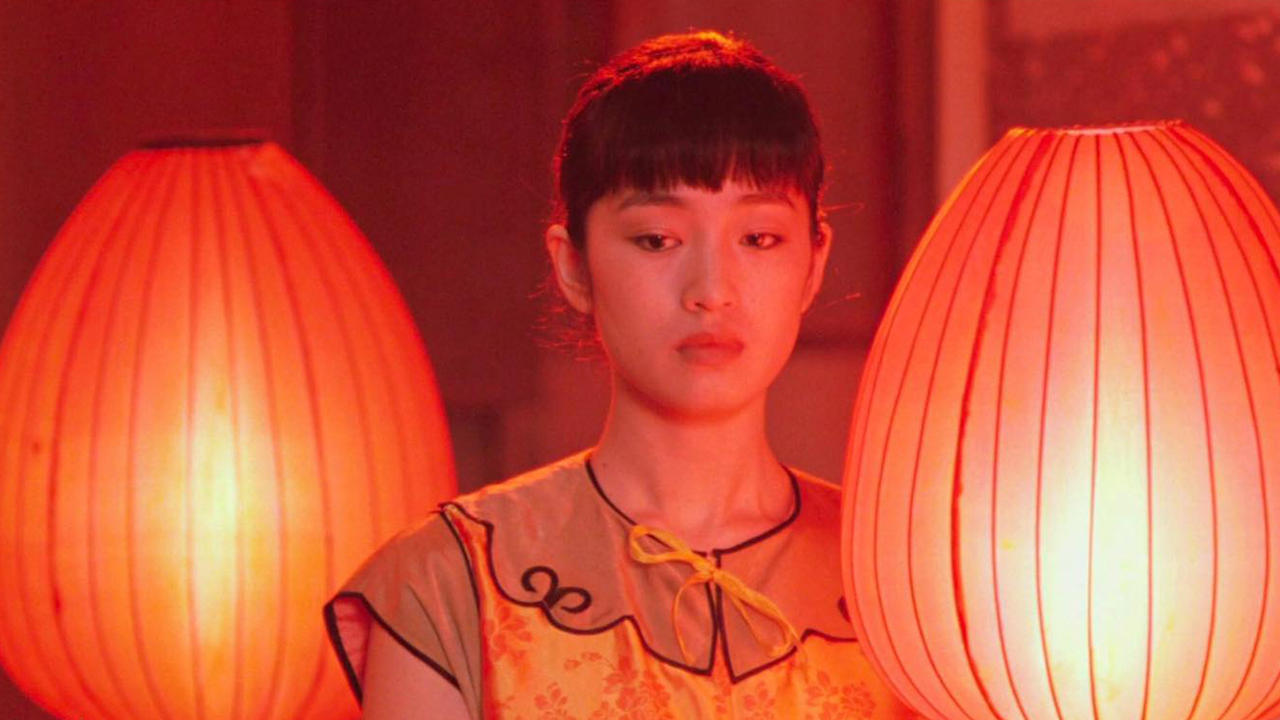
Despite some fairly significant changes to Chinese society by the 1920s, the role of the concubine was still pretty much as it had been for generations for the nineteen year old "Songlian" (Gong Li) who is essentially sold by her well-meaning mother into the home of a wealthy gent (Jingwu Ma). She is to be his fourth and youngest mistress, is to be housed in quite a sumptuous villa adjacent to her colleagues and each evening their master will instruct that the red lanterns be lit outside the home of the lucky recipient of his attentions - and a ritual foot massage - that evening. Naturally, her arrival causes some resentment, especially from the over-indulged, opera singing, third lady (Saifei He), but the second one (Cuifen Cau) seems a little more friendly and the matriarch (Shuyuan Jin) appears content to preside over his household without any expectations. "Songlian" has been assigned a servant "Yan'er" (Lin Kong) whom she doesn't entirely trust and as our story unfolds we discover that there is only a thinly veiled toxicity present amongst this ostensibly happy household. Now I'm no cinema technophile but the colourisation here is really quite striking, especially as these lanterns flicker, and somehow they manage to reflect something of the vulnerability of "Songlian" as she treads her way through a field of eggshells to navigate this vagaries of this residence as well as offering a degree of constancy from the perspective of the lottery that often fuels their daily lives. The clash of the old and the new, whilst not abrasive, is still gently suggestive that the days when women were the property of a man might - but only might - be nearing their end, and the meticulous production and costume design gives this whole film a certain frailty that reflects that, too. The storytelling is at it's most effective as the snow falls around their little mews, offering us something additionally chilling to a story that takes a very dim view of romantic love. The conclusion is quite grim, no other word for it, but it fits in powerfully with the notion of these historical cycles that had prevailed for centuries and allowed little room for personality. It's a chapter in…
Tell us what is wrong with Raise the Red Lantern. Reports are reviewed by a person, not a bot.