Synopsis
Maria Callas, the world's greatest opera singer, lives the last days of her life in 1970s Paris, as she confronts her identity and life.

The trailer isn't playing right now
The source refused this stream. Nothing else on the page is affected — the cast, ratings and details below are all live.
Trailer finished
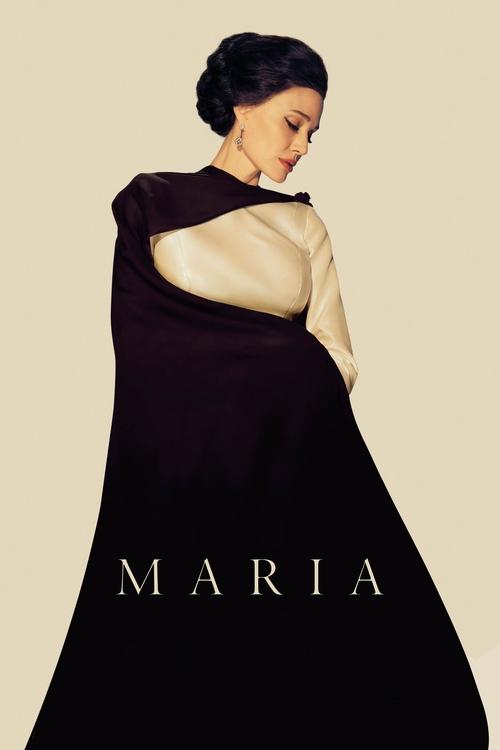
Film
Maria (2024) is a history, drama and music film. It runs 123 minutes. It was directed by Pablo Larraín. TMDB viewers rate it 6.5 out of 10 from 509 votes. It carries an R age rating. In the United States it streams on Netflix and Netflix Standard with Ads.
 Angelina Jolie
Maria Callas
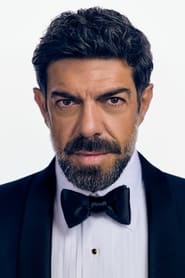 Pierfrancesco Favino
Ferruccio
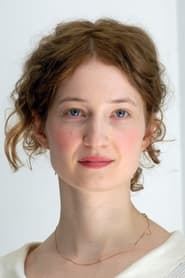 Alba Rohrwacher
Bruna
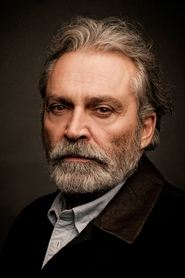 Haluk Bilginer
Aristotle Onassis
 Kodi Smit-McPhee
Mandrax
 Stephen Ashfield
Jeffrey Tate
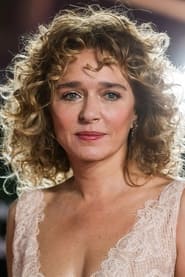 Valeria Golino
Yakinthi Callas
 Caspar Phillipson
John. F Kennedy
 Lydia Koniordou
Lista Callas
 Vincent Macaigne
Doctor Fointainebleau
 Jörg Westphal
SS Officer
 Philipp Droste
SS Officer
 Alessandro Bressanello
Giovanni Battista Meneghini
 Paul Spera
Ronald
 Lyes Salem
Waiter
 Christophe Favre
Maître d'Hôtel
 Hugo Dillon
Pierre
 Toma Hrisztov
Opera Lover
 Rebecka Johnston
Party Guest
Maria (2024) is a history, drama and music film directed by Pablo Larraín from Germany and Italy and United States and Chile. It runs 123 minutes and is listed as released. Angelina Jolie and Pierfrancesco Favino lead the cast. It took $504,938 at the box office. Viewers rate it 6.5 out of 10 from 509 votes. In the United States it streams on Netflix, Netflix Standard with Ads.
Maria Callas, the world's greatest opera singer, lives the last days of her life in 1970s Paris, as she confronts her identity and life.

1 / 4
Best Recommended
Stream on MovieState
Availability differs by country and server. Check the options on this page first, then open the player.
 Netflix
 Netflix Standard with Ads
Official streaming partners in the United States. Availability varies by country and provider, and these are listings rather than our own servers.
 The Apartment Pictures
 Komplizen Film
 Fabula
When one achieves greatness at his or her craft, it’s difficult to walk away when the skills behind it begin to fade. Moreover, facing the hard truth that one’s peak may indeed be irretrievably in the past can be even tougher to accept, no matter how passionate one’s desire might be for it. Such was the anguish that…
When one achieves greatness at his or her craft, it’s difficult to walk away when the skills behind it begin to fade. Moreover, facing the hard truth that one’s peak may indeed be irretrievably in the past can be even tougher to accept, no matter how passionate one’s desire might be for it. Such was the anguish that befell Maria Callas (1923-1977) (Angelina Jolie), one of the greatest operatic talents of all time, as she approached the end of her successful but stormy life. Having not performed in nearly four years, with her mental and physical health and singing ability failing, she contemplated a comeback but was torn between taking on the rigors of such an arduous task and living the life of personal contentment she always wanted for herself. It was also a time when she reflected upon her professional accomplishments and personal pursuits, aspects of her past filled with triumphant highs and agony-ridden lows, told through poignant flashbacks shot in stunning black and white. And, as portrayed here, in between these opposing aspects of her life, she veers off into imagined scenarios in which she struggles to distinguish reality from suspected hallucination. In telling this story, director Pablo Larraín provides viewers with a thematically interpretive character study of the grand diva’s storied life, not a by-the-numbers biographical checklist, much like what the filmmaker did in two of his previous releases, “Jackie” (2016) (about First Lady Jacqueline Kennedy) and “Spencer” (2021) (about Princess Diana Spencer), both of which, when combined with this offering, present a trilogy about the lives of three strong, powerful women who lived extraordinary but turbulent lives. What sets this one apart from its predecessors is the career of its protagonist, whose broad range of operatic performances is beautifully captured in an array of sequences. It also showcases Callas’s reputation for being a prima donna but does so without going over the top. In fact, some have criticized the picture for being too subdued in its portrayal of the grand dame. But I personally appreciated the restraint exercised here, an approach that could have easily turned Callas into a…
It's no wonder that event cinema thrives when you consider just how impressive it is to hear a full orchestra, some Pucchini or Verdi and the magnificently powerful voice of this eponymous soprano through big screen sound. Of course I could have been doing with a great deal more of her singing, but Pablo Larraín…
It's no wonder that event cinema thrives when you consider just how impressive it is to hear a full orchestra, some Pucchini or Verdi and the magnificently powerful voice of this eponymous soprano through big screen sound. Of course I could have been doing with a great deal more of her singing, but Pablo Larraín wasn't offering us a "Now That's What I Call Maria" compendium. Instead he has teamed up with Angelina Jolie to share this temperamental woman's last week of life in Paris in 1977. She lives in a lavish apartment staffed by her two faithful and loving retainers Bruna (Alba Rohrwacher) and Ferruccio (Pierfrancesco Favino). These two have been with her for many years and are now well used to managing her mood swings, her addiction to medication and to her obsession with moving the piano around with spine-straining regularity. Each day she leaves her apartment bedecked in furs and jewels, strolls the city and ends up in a theatre where she vacillates about singing again - after over four years. I did quite like the technique used to thread the story together, using Kodi Smith-McPhee as her handsome new friend "Mandrax" who is conducting a television interview which serves as a conduit for her to reminisce. She has plenty to reminisce about, too, as we mix her childhood in Nazi occupied Greece with her rise to fame before her rather toxic and controlling relationship with Aristotle Onassis (Haluk Bilginer) ends her career. Her staff are so concerned, they recruit the services of a doctor (Vincent Macaigne) who has some stark warnings for a lady who rarely eats and has pills hidden throughout her home, but what's clear from Jolie's quite sensitive performance here is that she isn't a person capable of differentiating between real and make believe any more, and who really just wants to finally live her life - and sing - for herself, regardless of the consequences. It's astonishing that so many people who found fame and fortune in the entertainment industry ended up like Callas, and that rather depressing fait accompli is quite effectively delivered here by a considered effort from a star whose physical resemblance also helped to convince and elicit some…
<em>'Maria'</em> makes for fascinating viewing. I knew nothing, to be honest, directly of Maria Callas before watching, though obviously had heard of the grand pieces of music. Very sad, if naturally very interesting, to learn more about her and her final days. Beautifully told. Really intriguing to see that Steven…
<em>'Maria'</em> makes for fascinating viewing. I knew nothing, to be honest, directly of Maria Callas before watching, though obviously had heard of the grand pieces of music. Very sad, if naturally very interesting, to learn more about her and her final days. Beautifully told. Really intriguing to see that Steven Knight wrote this, not something I'd expect to see him write based on the other work of his that I've seen - more fool me, evidently a man of many talents. Knight and those offscreen are reasons why this is terrific as it is, though the cast are too. I feel like I've not seen enough of Angelina Jolie. I have seen a fair few films featuring her and have known her name for as long as I can remember, but do sense I've not watched as much as I ought to have done; a bit like George Clooney. Jolie is outstanding here, no doubt about it. Pierfrancesco Favino and Alba Rohrwacher are also sizeable parts of this, they ensure that the movie holds much heart - I genuinely cared for Ferruccio & Bruna as much as Maria by the end, so credit to them both. Haluk Bilginer and Kodi Smit-McPhee are most noteworthy from the rest. My only criticism (and it's barely that, if at all) would be that the singing audio isn't the most convincing when paired up with Jolie's lip-synching. It's quite obvious, but then again I guess it is a very tough element to sync up perfectly; especially with such a unique voice. I watched this at the cinema straight after seeing Robert Zemeckis' <em>'Here'</em>. No bad decisions were made.
Tell us what is wrong with Maria. Reports are reviewed by a person, not a bot.